01 · Thesis

Stacking MHP and compute waste heat at San José

A thermal-fit thesis for the ADFU upgrade and the Jacobs–MicroLink technology integration partnership.

Jacobs' Microbial Hydrolysis Process and MicroLink's compute waste heat are made for adjacent jobs at the San José–Santa Clara Regional Wastewater Facility. MHP is a post anaerobic digestion sidestream reactor at 75 °C that lifts biogas yield up to 36 percent at this site. MicroLink's 50 °C closed-loop waste heat sits at exactly the right tier for mesophilic digester heating and raw sludge preheat.

The thermal stack is additive: MicroLink takes the low-grade duty that today consumes recoverable cogen heat, freeing 8 to 12 megawatts of high-grade thermal capacity for the new MHP module and freeing the post-upgrade biogas surplus for monetisation through renewable natural gas injection at roughly $45 per MMBtu all-in.

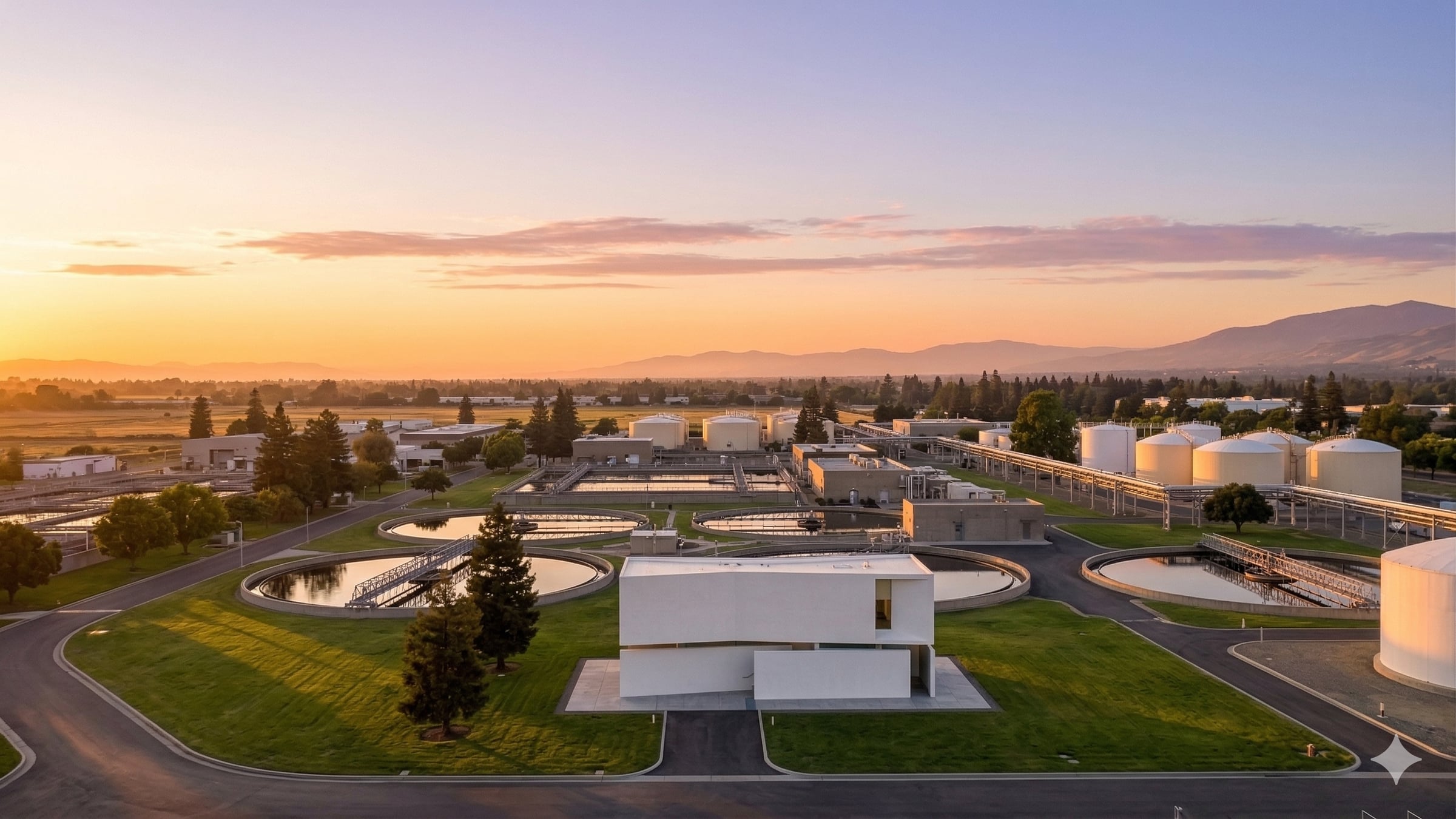
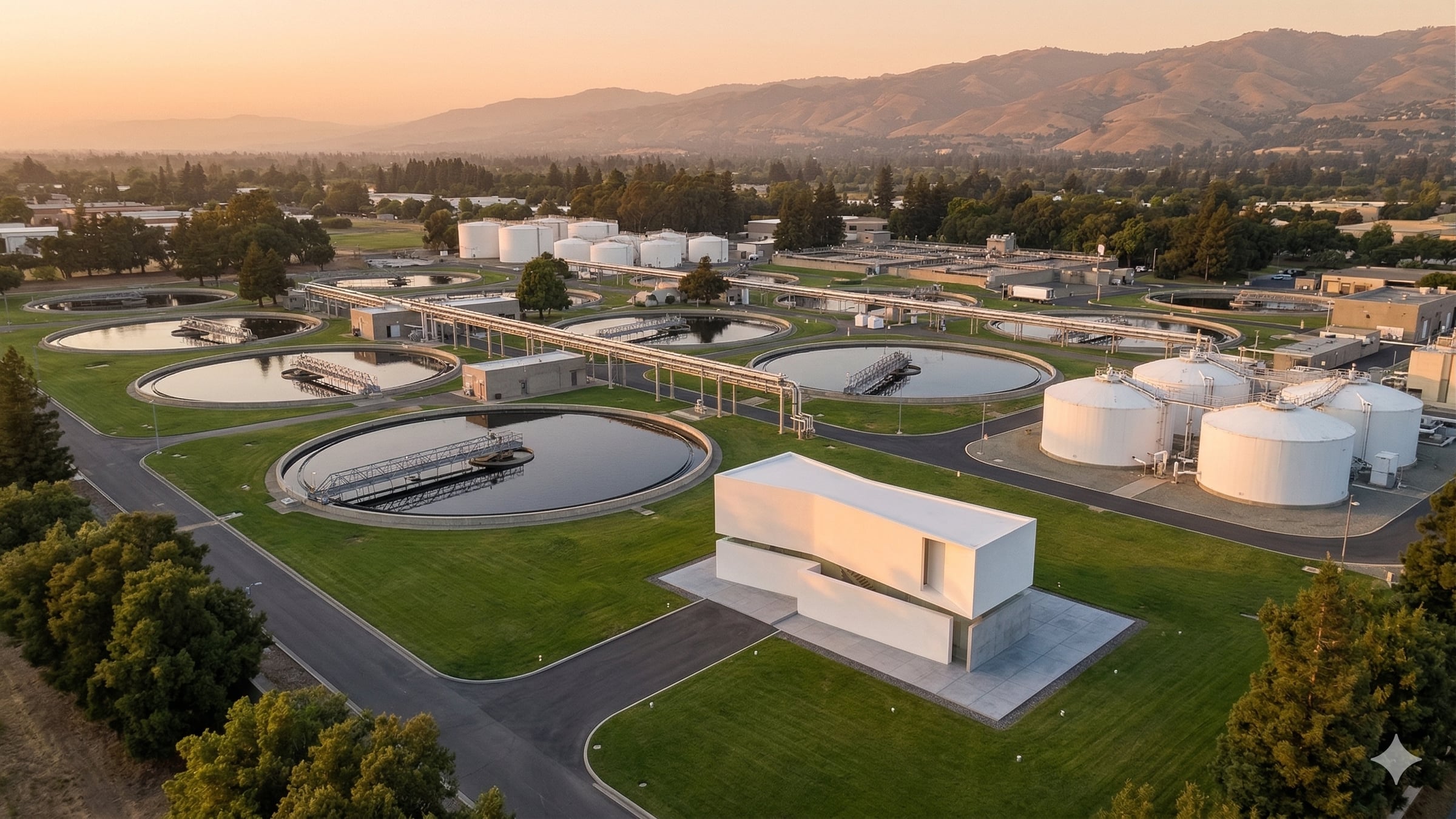
San José–Santa Clara RWF aerial at golden hour, mountains in distance IMAGE — Hero San José RWF aerial, post-2022 cogen and dewatering builds, looking from north-west toward the bay. img-1-1

The core claim

The Jacobs cogeneration facility at San José rejects an estimated 8 to 12 megawatts of recoverable thermal energy to atmosphere today. The post-ADFU plant will produce 35,000 to 55,000 cubic metres per day of biogas surplus. MicroLink resolves both: a colocated heat sink that absorbs the rejected thermal energy and frees the biogas surplus for higher-value monetisation.

A 10 MW MicroLink deployment captures 8.5 MW thermal (85% of IT load), delivers ~6 MW to the digesters at 55–60 °C, and generates 2.3 MW of behind-the-meter electricity through an on-site molten carbonate fuel cell on freed biogas. Net grid draw drops 21%. CO₂ avoided: ~11,750 tCO₂e per year. We propose to anchor this as the first-of-kind reference deployment of a generalisable Jacobs–MicroLink integration system.

Three goals for the meeting
Goal 01

Site partnership

A two-track partnership structure with the City of San José: an Expression of Interest within 30 days enabling inclusion of a future-ready thermal stub-out in the ADFU design basis, with a Letter of Intent at 90 days and a Definitive Agreement on a 9-month track.

Goal 02

Technology co-development

A working partnership with Maddy Fairley-Wax as the Jacobs technical anchor for a generalisable integration system — pre-engineered components, validated controls, deployable as a productised offering across Jacobs' WRRF client base and MicroLink's host pipeline.

Goal 03

Strategic relationship

Anchored in the above, an introduction to Jacobs Water leadership for a broader partnership conversation at whatever pace is appropriate inside Jacobs.

MicroLink concrete pavilion at sunset with mountains
02 · MicroLink

Heat recovery infrastructure for data centres

2.1 — Who we are

MicroLink Data Centers builds heat recovery infrastructure for data centres. We design, build, and operate the thermal layer that turns compute waste heat from a problem into a resource. Our purpose-built systems — covered under provisional patent ML-IND-001 — sit at the boundary between AI compute and the host process loop, capturing 50 °C closed-loop heat from rack-level liquid cooling and delivering it into industrial, utility, and public-sector heat sinks where it does useful thermodynamic work.

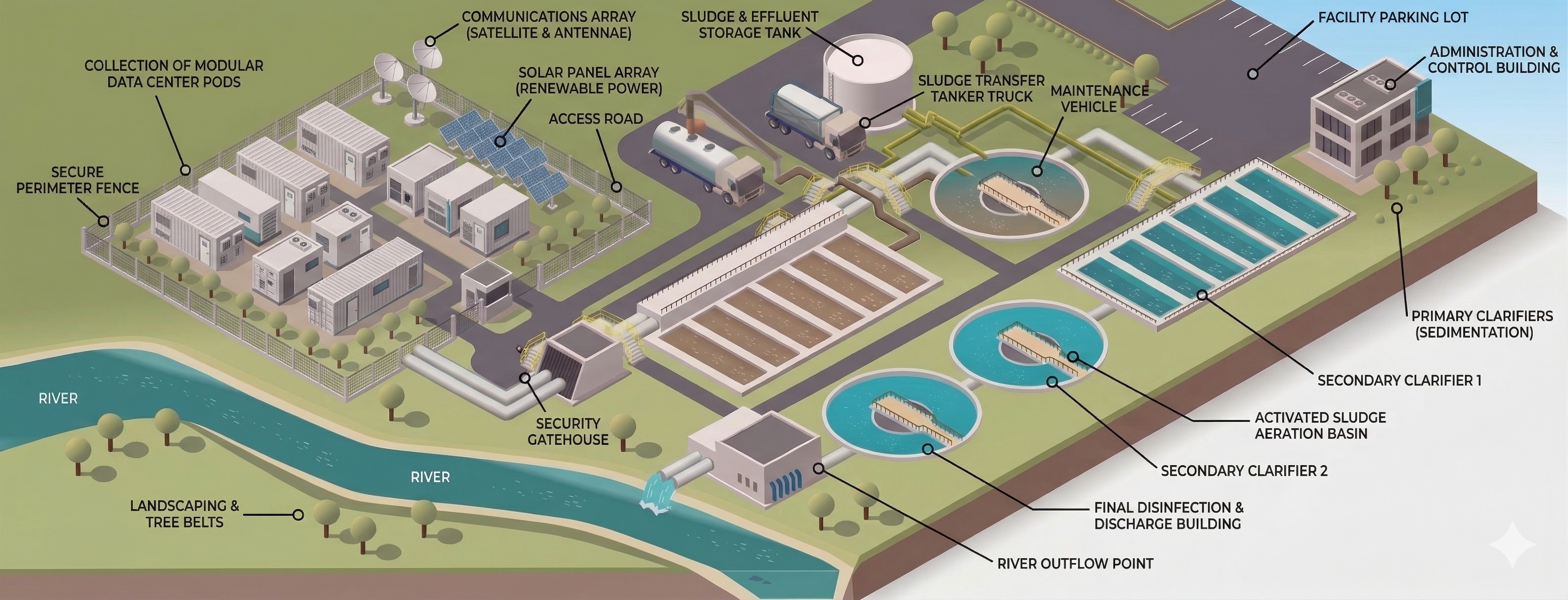
The architecture is small-footprint, modular, and deployable inside the operating fence line of an existing public-sector or industrial site without requiring greenfield land development or new high-voltage transmission. Wastewater treatment plants are the first category. The thermal-fit logic extends to district heating networks, food processing facilities, and any industrial host with a low-grade thermal demand that compute waste heat can serve.

We are a public-sector AI infrastructure partner. We deploy on public-sector sites and we work with public-sector teams to stand up sovereign and municipal AI capability. NVIDIA is our primary go-to-market partner; we are in final stages of NVIDIA Cloud Partner programme approval, expected within two weeks, with two parallel partnership tracks: deployment partnership at this San José site, and global public-sector partnership covering shared infrastructure for sovereign and municipal AI compute.

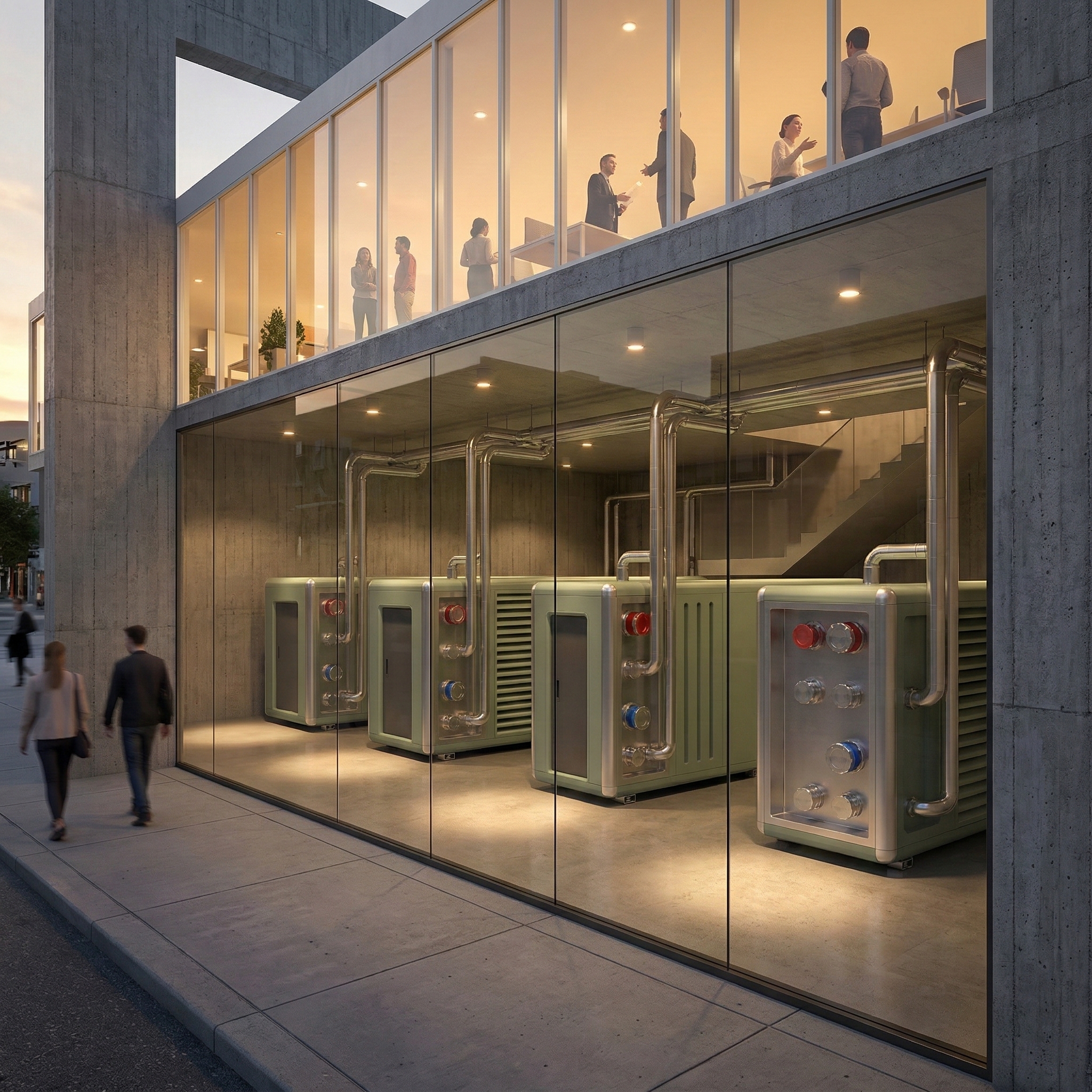
MicroLink glass-fronted facility with green compute pods, evening IMAGE — MicroLink aerial Schematic aerial of a MicroLink integration. The compute facility (right) connects through a closed thermal loop to the host's process infrastructure (left). The architecture is sized for behind-the-fence deployment at industrial and utility sites.
[render: what_is_microlink_aerial_png.png]
img-2-1
IP positionML-IND-001 (prov.)
Heat captured85% of IT load
Energy reuse< 0.5 ERE
CO₂ avoided~1,175 tCO₂e per MW per year
Footprint150 m² per MW deployed
2.2 — The NVIDIA partnership

MicroLink is in active partnership discussions with NVIDIA on two parallel tracks: a deployment partnership covering this San José site, and a global public-sector partnership covering shared infrastructure for sovereign and municipal AI compute. Both tracks are pending NVIDIA Cloud Partner programme approval, expected within two weeks. We can speak to additional detail once approval is granted.

2.3 — Why we are at this table

The MicroLink technical thesis was first articulated by Jacobs itself. Debbie Seibold Egeland's 2023 Driving Sustainability in Data Centers white paper identified the colocation of compute infrastructure with wastewater treatment as a structural decarbonisation opportunity. The 2022 six-part Hydrogen from Wastewater series by Andrew McLeod and Stephen Horrax laid out five pathways from biogas to hydrogen, of which Pathway 5 — steam methane reformation of upgraded biomethane — is the most commercially relevant in the 2026 California market.

Jacobs published the thesis. We have built the technology that makes it deployable. The opportunity at San José is unique: the City has just contracted Jacobs to build the largest active MHP deployment in the United States. The site has approximately 750 acres (305 hectares) of freed industrial-zoned footprint inside the operating fence line. The cogeneration system rejects 8 to 12 megawatts of recoverable heat to atmosphere today.

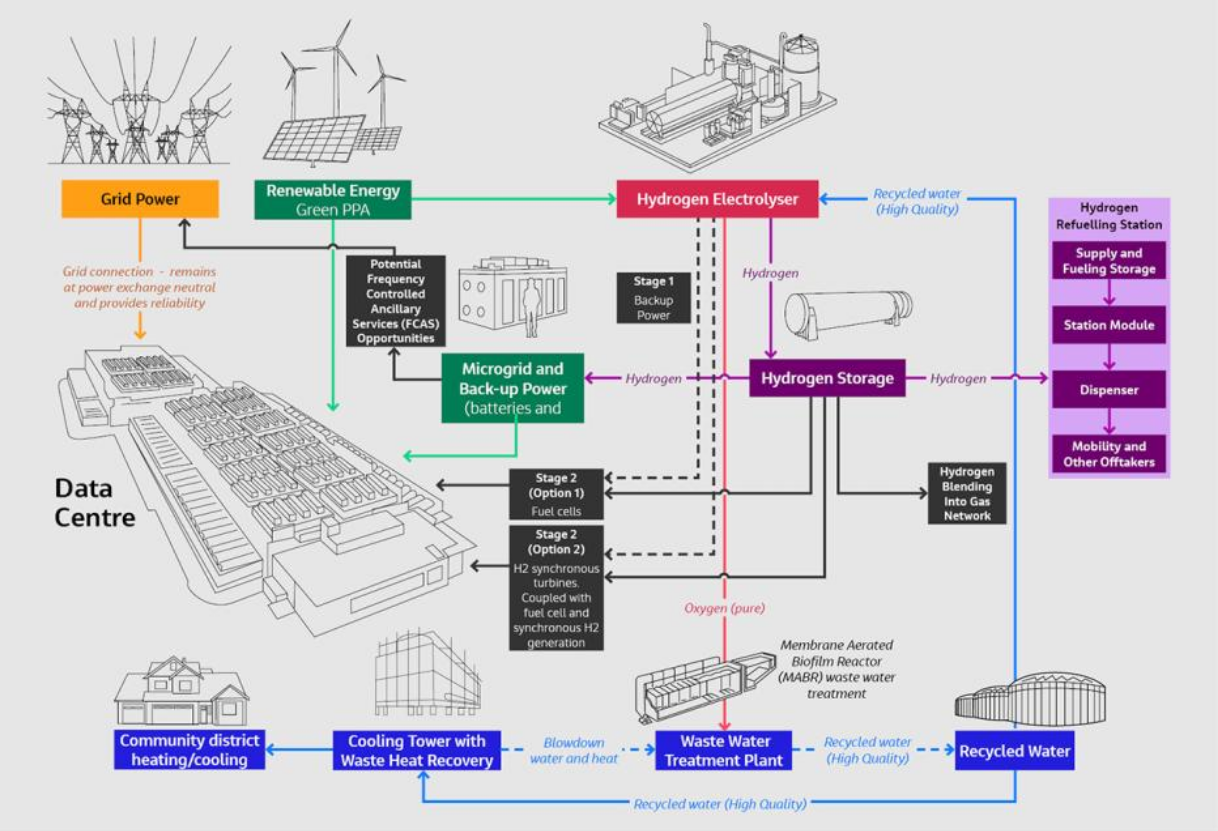
Jacobs hydrogen-from-wastewater process schematic IMAGE — Document cover Egeland 2023, "Driving Sustainability in Data Centers", Jacobs white paper. img-2-2

Source: Jacobs, Hydrogen from Wastewater (2022). Reproduced for technical context.

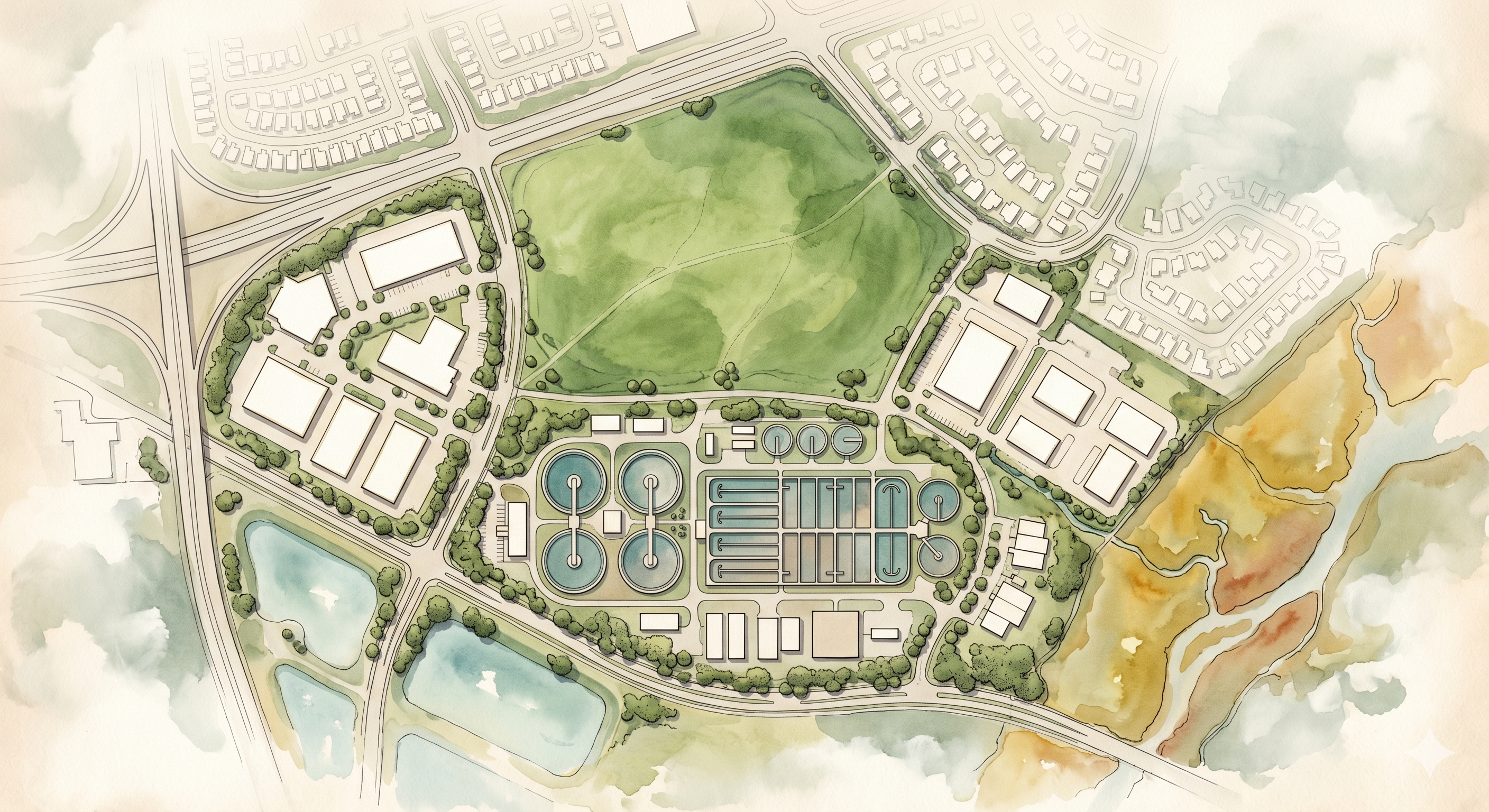
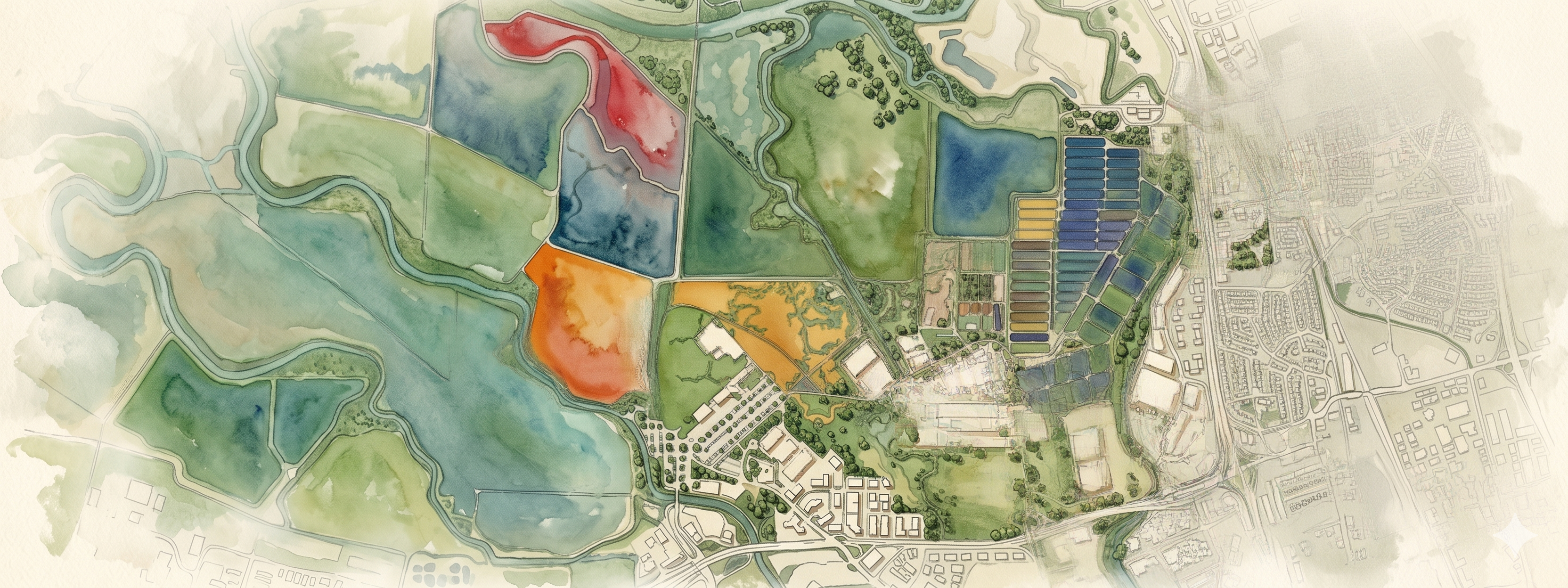
Watercolour aerial — RWF clarifier basins and treatment cells IMAGE — Document cover McLeod & Horrax 2022, "Hydrogen from Wastewater", Jacobs six-part series. img-2-3

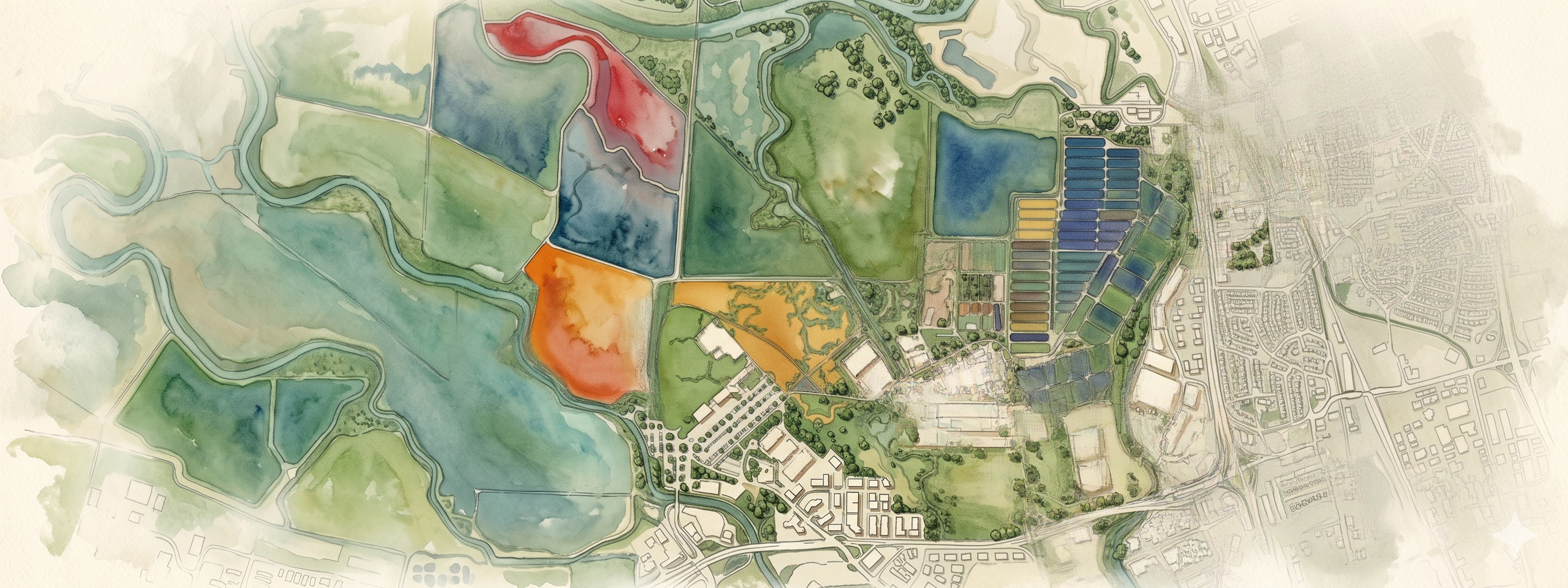
Site plan — RWF clarifier basins and treatment cells.

"Jacobs published the thesis. We have built the technology that makes it deployable."
Watercolour aerial — wider site context with surrounding fields

Site context — RWF in its wider regional setting.

2.4 — How it works
Integrated Sustainability Complex
01 — The host facility

Inside the fence line

MicroLink deploys compute inside operating industrial facilities — wastewater plants, food processors, district energy networks. No new building. No greenfield. The host generates value from infrastructure it never paid for.

$0
Host capex
85%
Heat to host
11.7K
tCO₂e / year avoided
Modular MicroLink compute module cutaway
02 — The compute module

Through the door

High-density liquid-cooled compute, deployed through the host's door. Server heat exits as hot water via a plate exchanger — never as wasted air, never mixing with the host's pipes. IT and host remain physically separated at all times.

2.04
tCO₂e / GPU / year saved
21%
Grid offset (BTM)
< 0.5
Energy reuse (ERE)
Three-loop thermal architecture
03 — The thermal architecture

Three isolated loops

Server coolant never touches the host's pipes. A plate exchanger transfers heat across the boundary, delivered at the temperature the host process requires. A dry cooler always backstops the rejection path — host and compute carry no dependency on each other.

6 MW
Heat to digesters
6.2M m³
Gas displaced / year
100%
Loop isolation
Thermal fit 1 of 4
Design · Thermal complementarity

Why MHP and MicroLink waste heat are temperature-complementary

MHP is biological hydrolysis at 75 °C, fundamentally distinct from Cambi or Veolia Exelys thermal hydrolysis at 140 to 180 °C and 5 to 8 bar. The MHP reactor uses Caldicellulosiruptor bescii, a hyperthermophilic anaerobic bacterium, with hydrolysate volatile fatty acids returning to the primary digester for methanogenesis.

The 75 °C operating temperature requires a high-grade heat source — at this site, the cogen jacket water at 85 to 95 °C. MicroLink's 50 °C closed-loop waste heat cannot drive MHP. It can, however, comfortably drive the mesophilic digester loop at 37 °C and the raw sludge preheat from 15 °C to 35 °C. These are exactly the duties that today consume cogen jacket water that would otherwise serve the new MHP module.

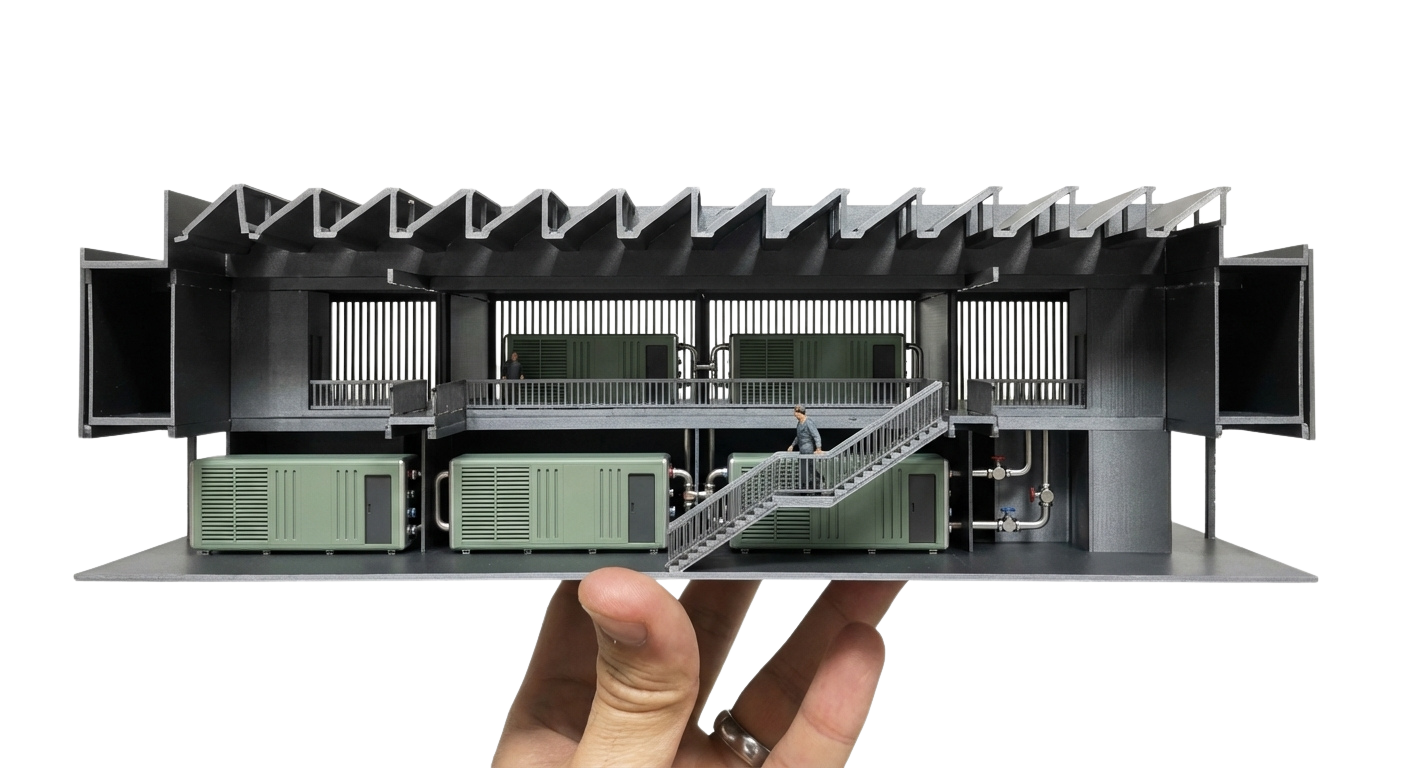
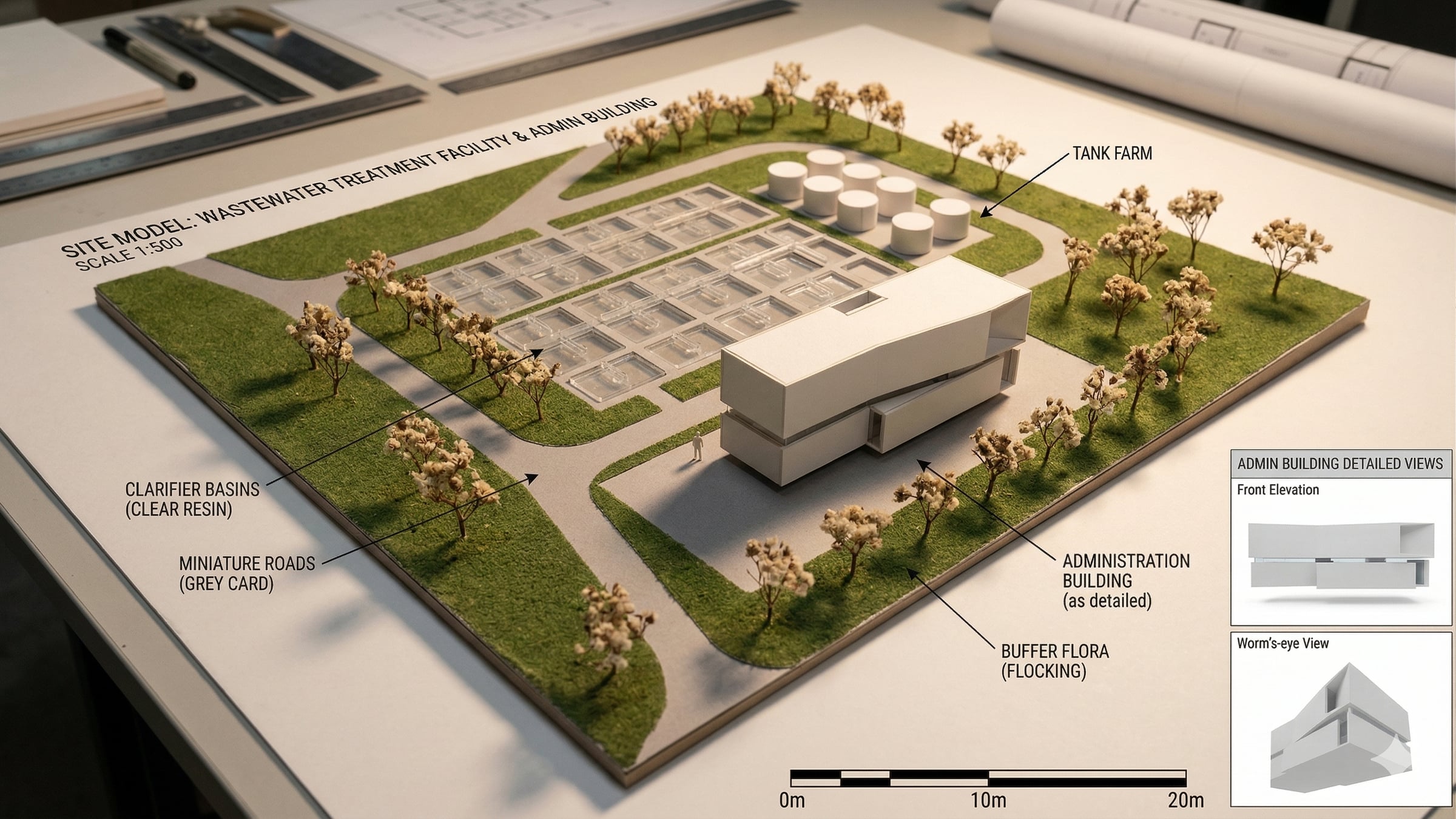
Architectural site model — WWTP and admin building IMAGE — Microscopy Caldicellulosiruptor bescii — hyperthermophilic anaerobe, the organism driving MHP hydrolysis at 75 °C. img-4-1

Site model — WWTP plant and integrated administration building.

MHP processBiological, 75 °C, 2-day HRT
MHP organismC. bescii, atmospheric
NVL72 rack power132–155 kW (GB300)
Facility water inlet17–45 °C (ASHRAE W+)
Facility water return≤ 65 °C
CoolantPG25 (propylene glycol 25%)
Flow per rack177 LPM @ 45 °C inlet
CDUCoolIT CHx2000, 2 MW × 8–9 (N+1)
Margin to digester10 °C (65 °C → 55 °C)
90 °C 75 °C 55 °C 37 °C 15 °C TEMPERATURE Cogen jacket 85–95 °C MicroLink loop 45–50 °C PLANT DUTY FIT MHP HFR reactor — 75 °C Not applicable TPAD thermophilic Stage 1 — 50–55 °C Marginal Mesophilic digester loop — 37 °C Excellent Raw sludge feed preheat — 15→35 °C Excellent Cogen continues to serve high-grade duty (75 °C). MicroLink substitutes for cogen on mesophilic and preheat duties — freeing approximately 4 to 5 MW of recoverable cogen heat for redirection to the new MHP module.
Figure 4.1 — Duty / source / fit ladder, post-ADFU configuration
BandPlant dutySource requiredFit
75 °CMHP HFR reactorCogen jacket water (85–95 °C) onlyNot applicable
50–55 °CTPAD thermophilic Stage 1Cogen jacket waterMarginal
37 °CMesophilic digester loopCogen or MicroLink (45–50 °C)Excellent
15→35 °CRaw sludge feed preheatAny heat sourceExcellent
Result · additive, not competitive

The thermal stack is additive, not competitive. Cogen jacket water continues to serve the high-grade MHP duty. MicroLink waste heat substitutes for cogen on the mesophilic loop and feed preheat. The result is roughly 4 to 5 megawatts of recoverable cogen heat freed for redirection — most usefully to the new MHP module, where the high-grade thermal demand is now most concentrated.

MicroLink building, sunset, mountains backdrop
Energy balance 2 of 4
Design · Energy balance

San José energy balance, today and post-ADFU

The case for MicroLink at San José is not heat supply gap-filling. The plant has more cogen heat available than it needs. The case is thermal substitution: MicroLink absorbs the low-grade duty currently met by cogen, freeing high-grade cogen capacity for the new MHP module and freeing the post-upgrade biogas surplus for monetisation.

TodayPost-2022 cogen, pre-ADFU
Plant electrical demand~11 MW
Cogen output11–14 MW
Cogen recoverable thermal17–19 MW
Plant thermal demand5–7 MW
Heat rejected to atmosphere8–12 MW
Biogas production50,000–65,000 m³/d
Biogas energy600–900 MMBtu/d
Post-ADFU + MicroLink2028–2029
Plant electrical demand12–13 MW
Cogen output14 MW nameplate
Cogen recoverable thermal17–19 MW
Plant thermal demand7–9 MW
Heat rejected to atmosphere→ 0 MW (absorbed by MicroLink)
Biogas production85,000–120,000 m³/d
MCFC electricity (BTM)2.3 MW (FuelCell SureSource 3000)
MCFC thermal output1.8 MW
H₂ capability (tri-gen)up to 1,200 kg/day
Net grid draw at 10 MW IT8.9 MW (−21%)
CO₂ avoided11,750 tCO₂e / year

Two simultaneous shifts. First, biogas production increases by 60 to 80 percent through the combined MHP uplift and FOG co-digestion. Second, plant thermal demand increases only modestly because the new MHP module concentrates duty at 75 °C, not at the mesophilic temperature where most of the existing demand sits.

The combined effect: a substantial biogas surplus the existing 14-megawatt cogen cannot consume at full duty cycle, paired with a heat-rejection problem that has not improved. Both are resolved by a colocated thermal partner.

Aerial site plan, San José–Santa Clara Regional Wastewater Facility DIAGRAM — Sankey Biogas energy flow at the post-ADFU plant — cogen consumption, digester thermal duty, MHP HFR duty, and surplus available for monetisation. img-5-1

Site plan — RWF and surrounding context.

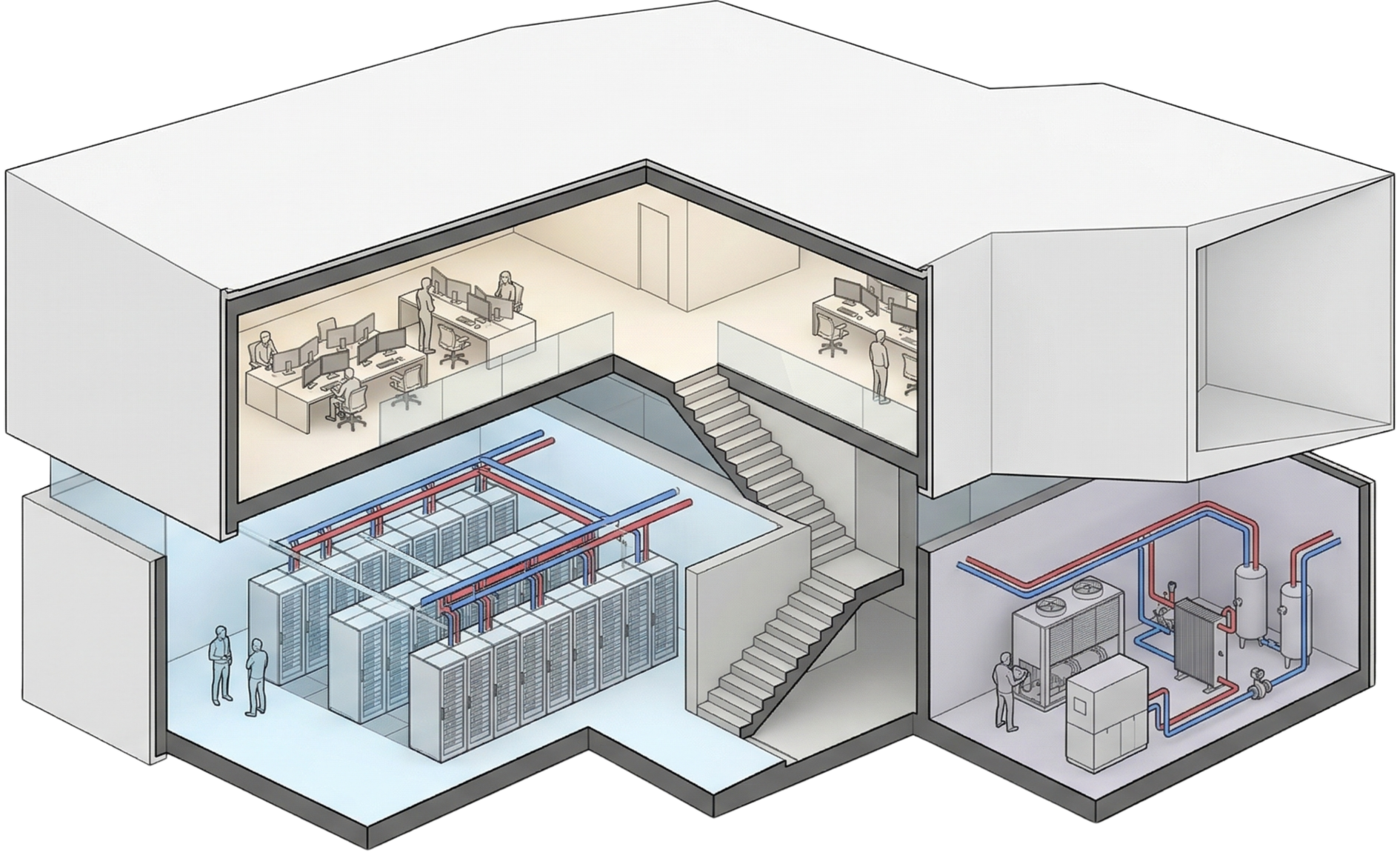
S-section cross-section, integrated facility

Integrated facility section — compute on top, mechanical below, host process beyond.

The integrated facility section illustrates how a MicroLink deployment occupies a compact vertical envelope adjacent to the host process, with the thermal interface running horizontally between them at digester level. The MCFC sits behind the compute envelope, fed by the freed biogas line from the digesters.

Freed value 3 of 4
Design · Freed value

Three pathways for the freed biogas at 2026 California prices

The freed biogas — both the MHP and FOG yield uplift and the cogen displacement that MicroLink enables — has three monetisation pathways. We have priced each at 2026 California market terms, drawing on CARB LCFS quarterly transfer reports through February 2026, CPUC Decision 24-08-007, the IRS final rule on Section 45V, the OBBBA, and the Jacobs McLeod and Horrax 2022 hydrogen series.

A
Cogen export and behind-the-meter offset
PG&E SRAC · BioMAT Cat 1 · retail offset
$19/MMBtu
range $8–33
Annual at 5–10 MW IT scale
$0.6–4M / year
Recommended
B
RNG injection with LCFS + D3 RIN
PG&E G-BIO interconnection
$20/MMBtu
range $15–25
Annual at 5–10 MW IT scale
$1.5–7M / year
C
Hydrogen via Pathway 5 SMR
Biomethane upgrading + SMR
$30/MMBtu
range $22–60
Annual at 5–10 MW IT scale
$3–18M / year
Range reflects 45V status uncertainty post-OBBBA.

Pathway B is the primary monetisation route at San José. The all-in value reflects 2026 California market conditions: CARB LCFS pathway value at $5–10 per MMBtu (post-2025 LCFS market amendments), federal D3 cellulosic RIN value at $5–10 per MMBtu, gas commodity at PG&E citygate at $3–4 per MMBtu, and avoided distribution charges. PG&E's Schedule G-BIO interconnection programme provides the technical pathway. SB 1440 capital incentives offset interconnection capex up to $3 million for non-dairy WWTPs. WWTP biogas carbon intensity is structurally distinct from deeply-negative-CI feedstocks like dairy or food-scraps RNG; the figures here reflect a realistic +30 to +55 gCO₂e/MJ Tier 2 pathway.

DIAGRAM — LCFS price trend California LCFS credit price, 2024–2026, with diesel benchmark and CNG-equivalent pricing overlaid. img-6-1
Aggregate value · central case

Combined gross value at the post-ADFU plant, with a 6 to 10 megawatt MicroLink IT deployment:

approximately $7 to $16 million per year

Freed-biogas pathways: $5–14M/year. Plus the MCFC tri-generation layer adds ~$1.8M/year of behind-the-meter electricity at avoided-cost rates. This is the prize. The commercial structure between MicroLink and the City — the value share between host and developer — is a separate negotiation. This figure illustrates the magnitude, not the proposed allocation.

Two-track partnership 4 of 4
Design · Partnership

A two-track partnership proposal

The partnership we propose is structured to protect each party's interests, to fit the ADFU project's design schedule, and to support MicroLink's ability to raise the capital required for the eventual deployment. It runs on two parallel tracks anchored on a sequenced commitment instrument: Expression of Interest, Letter of Intent, Definitive Agreement.

Track 1

The stub-out and the EOI

A future-ready thermal interface, designed and built by Jacobs as a defined scope addition to the existing $200 million ADFU progressive design-build contract.

Three interfaces
Tap on the mesophilic digester recirculation manifold; parallel branch on the cogeneration jacket-water return loop; tap on the raw sludge feed line.
Sized for
A future 5 to 10 megawatt thermal interface, designed by Jacobs to specification, owned by the City as part of the ADFU asset.
Funded by
MicroLink at approximately $1 million, contributed to the City under a Cost-Sharing Agreement structured through San José Charter §1217 (developer carve-out) layered on a Government Code §4217 finding (energy-services framework).
First commitment
A short-form Expression of Interest signed within 30 days, scoped to authorise inclusion of the stub-out concept in the ADFU design-basis discussion. Three EOIs together — City of San José, NVIDIA, Jacobs — anchor the equity raise that funds the stub-out and the eventual deployment.
Track 2

The LOI and the Definitive Agreement

Within 90 days of EOI signature, both parties commit to a full Letter of Intent. Within 9 months, the Definitive Agreement is signed.

Letter of Intent
Captures the technical specification, the commercial framework principles, and the timeline for Definitive Agreement negotiation.
Definitive Agreement
Land licence or lease for the future MicroLink facility on the freed footprint; thermal services agreement; biogas monetisation framework; operational protocols, performance standards, and dispute resolution; right of first negotiation for MicroLink on thermal interface use post-commissioning; information rights on plant operating data; performance milestones and termination provisions.
Trigger
The Definitive Agreement triggers escrow release on the stub-out funding. ADFU stub-out construction proceeds in base scope. MicroLink construction begins, with the modular first-deployment structure operational in the 2028–2029 window.
DIAGRAM — Escrow flow Escrow mechanics: EOI signed (Day 30) → LOI signed (Day 90) → Definitive Agreement signed (Day 270) → escrow releases on the stub-out funding. Capital protected on either path. img-8-1
The trigger

The two tracks are connected by a single trigger structure. The $1 million stub-out funding is held in escrow against execution of the Expression of Interest and releases on signature of the Definitive Agreement. If the Definitive Agreement does not sign — for any reason — the stub-out is value-engineered out of ADFU at no cost to the City, and the escrow returns to MicroLink.

This protects MicroLink's capital, gives the City a structured commitment, gives Jacobs a clean engineering scope, and creates a sequenced set of signed instruments — EOI, then LOI — that supports MicroLink's fundraising.

Eventual deployment scale
Eventual deployment capex$80–120 million
Stub-out contribution$1 million (~1%)
Term of host paymentsTBD in DA

MicroLink team: Nick Searra, CEO & Co-Founder · Sancha Olivier, Design, Site Inspection & Review · Shane Pather, CTO · David Hassler, Sales & Customer · Andrew Thomas, CCO · Deniz Akgul, Capital & Investment Advisor.

The plant 1 of 3
03 · Site

San José–Santa Clara Regional Wastewater Facility

The RWF is the second-largest advanced wastewater treatment plant in the western United States. Owned jointly by the City of San José (~80%) and the City of Santa Clara (~20%) under a 1959 joint powers agreement, operated by San José Environmental Services. It treats an average of 416,000 cubic metres per day (110 MGD) against a permitted capacity of 632,000 cubic metres per day (167 MGD), serves 1.5 million residents across eight cities and four sanitary districts, and discharges treated effluent to Artesian Slough.

The digester complex consists of twelve covered tanks of approximately 3,785 cubic metres each, totalling roughly 45,400 cubic metres of active volume. The plant operates a temperature-phased anaerobic digestion train: four thermophilic stages at 50 to 55 °C feeding into eight mesophilic stages at 35 to 37 °C. The 14-megawatt cogeneration facility was designed and built by Jacobs and came online in 2022 — DBIA 2021 National Award of Merit. The dewatering facility came online in 2025 at $164 million.

San José–Santa Clara RWF aerial at dusk with mountains IMAGE — Site overview RWF aerial showing the twelve digester tanks, cogen building, and active plant zone. img-3-1
Average flow416,000 m³/d (110 MGD)
Permitted capacity632,000 m³/d (167 MGD)
Service population1.5 million
Digester volume45,400 m³ (12 MG)
Cogen capacity14 MW (4× Caterpillar, 2020)
Site footprint, total1,050 ha (2,600 acres)
Recycled water8 MGD (SVAWPC)
Flood protection$197M levee, Sept 2025
Capital programme$2.1B (largest in city history)
Freed by Dewatering (2025)~750 acres (305 ha)
The ADFU project 2 of 3
03 · Site · ADFU

The Additional Digester Facility Upgrades programme

On 21 January 2026, the City selected Jacobs as progressive design-build contractor for the $200 million Additional Digester Facility Upgrades. The base scope covers structural, mechanical, electrical, and instrumentation renewal of the eight mesophilic digesters, replacement of floating covers with fixed covers, electrical upgrades, a new fats/oils/grease receiving station, and integration of Jacobs' proprietary Microbial Hydrolysis Process.

The project is currently in Phase 1 progressive design-build (preliminary services, $9.54 million envelope, plus up to $10 million in pre-authorised Early Work Packages). Phase 1 closeout and Guaranteed Maximum Price (GMP) execution are projected for late Q4 2026 to Q1 2027. The actionable window for low-six-figure cost on incremental scope is April through August 2026 — before the 30% design milestone in late summer. After that, scope additions process as formal change orders at materially higher cost.

A note on the Silicon Valley context. Digital Realty's SJC37 (48 MW) and Stack Infrastructure's SVY02A (48 MW) in Santa Clara are both fully constructed and entirely vacant — Silicon Valley Power's $450 million grid upgrade does not complete until 2028. The MicroLink site sits in PG&E territory with a 250 MW Implementation Agreement already in place. Modular containerised compute can be energised in 12 to 16 weeks, bypassing the multi-year grid queues that have stalled every other Silicon Valley deployment.

ADFU project site model with digester complex IMAGE — Jacobs press Jacobs press release, 21 January 2026 — ADFU contract award announcement. img-3-2
CityCity of San José
Co-ownerCity of Santa Clara
EngineerJacobs Solutions
ConstructorWalsh Construction
ConcreteStructural Technologies
Programme mgmtStantec
City PMJoel Cabrera, P.E.
Jacobs EVPGreg Fischer
Contract value$200 million
Contract typeProgressive design-build
Strategic context 3 of 3
03 · Site

Why this site, why now, why this configuration

Why this site

The freed Dewatering footprint at the RWF — approximately 750 acres (305 hectares) of City-owned, industrial-zoned land inside the operating fence line, freed by the $164 million Dewatering Facility commissioned in 2025 — is the largest piece of available industrial-zoned land at any major California wastewater treatment plant. It sits within thermal-pipe distance of the digester complex. The City has formally announced an intent to lease this land for clean-tech tenants and has issued an RFQ for up to 99-year leases (Keyser Marston Addendum No. 2, June 2025).

Why now

Mayor Matt Mahan announced his candidacy for Governor of California on 29 January 2026 with the primary on 2 June 2026. His public platform centres on tech infrastructure, AI, and data centre attraction — the City's $2.6 billion PG&E partnership (July 2025) pre-allocated 250 MW for up to ten large data centres in the South Bay. Deputy City Manager Manuel Pineda — formerly Chief Electric Utility Officer at Silicon Valley Power, now the City's operational champion on data centre attraction — has publicly described San José as "open for business for data centers." District 4 Councilmember David Cohen, in whose district the RWF sits, chairs the Transportation and Environment Committee and is also Vice-Chair of the Treatment Plant Advisory Committee. The political alignment in this window is unusually favourable.

Why this configuration

MicroLink's first deployment at this site is sized for a small modular footprint — approximately 1 to 2 hectares — connected to the thermal stub-out via short pipework runs. The configuration is deliberately compact and proximate to the digester complex, designed to validate the thermal-fit thesis at operating scale before committing to permanent infrastructure. The 750 acres provides ample optionality for future expansion. We expect to lead with a temporary or leased structure that can be relocated if conditions change — a posture appropriate to a first-of-kind deployment, distinct from the larger industrial-park developments contemplated elsewhere on the freed footprint.

Strategic site context, RWF and surrounding wetlands SITE MAP — Strategic siting Site map — RWF aerial with active treatment plant, freed Dewatering footprint (~750 acres / 305 ha), and indicative MicroLink siting near the digester complex. img-3-3

Production version will use georeferenced satellite imagery with the proximate siting strategy clearly indicated.

Political environment
  • Mayor Matt MahanGubernatorial candidate · primary 2 June 2026
  • DCM Manuel PinedaOperational champion · data centre lead
  • CM David Cohen (D4)RWF in district · T&E Chair · TPAC Vice-Chair
  • ESD Director Jeff ProvenzanoAuthored Climate Adaptation Plan (Mar 2026)
  • SJ Clean Energy leadErica Garaffo
Master plan, integrated industrial complex

Vision rendering — integrated sustainability complex at scale.

Five invitations 1 of 4
05 · Path forward

What we'd like to build, together

This brief is prepared for one conversation with one person. We have built a thesis that we believe sits in your domain, your judgement, and your intellectual interest. What follows is what we would love to do together — not what we are asking from you. Each invitation is structured around your authority and your sense of timing.

MicroLink reference architecture at sunset

MicroLink reference architecture — the category we'd build together.

RoleProcess Engineer
FirmJacobs Solutions
OfficeDenver
Lead authorWEFTEC 2024 (MHP)
AlsoEuropean Biosolids 2024
ChairWEF Residuals & Biosolids Community Bioenergy Subcommittee, 2025–26
Five invitations
01

Work through the technical thesis with us. Push back on the temperature complementarity argument. Tell us where the heat balance is wrong. Tell us where MHP integration with the existing TPAD train would surprise you. We have built a thesis we believe is defensible — we want it stress-tested by the person who knows the process best.

02

Co-develop the global strategy. Beyond San José: 276 large WRRFs in the United States, 690 in Europe. What does this category look like as a Jacobs–MicroLink offering? We would love to do this thinking with you, not present it to you.

03

Bring this into the conversation with NVIDIA. NVIDIA is our go-to-market partner. The technical narrative is stronger when a Jacobs process engineer is at the table. We would like you to be part of those conversations from a point that feels right to you.

04

Help us widen the conversation with the City and the public sector. Joel Cabrera originated this introduction and the City has been the catalyst. As the technical anchor, your judgement on how that conversation deepens — what it touches, who it includes, when it expands — is what we would like to follow.

05

Pull in others from your team, at your pace. Whoever you see as natural collaborators. The dyad pattern that productises this category needs more than two of us — we expect it. We move at whatever cadence and structure you find right, and we follow your lead on who joins the conversation when.

Market case 2 of 4
05 · Path forward · The market case

What this becomes, beyond San José

San José is the first instance of a model that travels. The defensible US addressable market is 276 large wastewater resource recovery facilities operating anaerobic digestion. Roughly two thirds of those plants sit inside Jacobs' active client orbit. The European market roughly doubles the long-run prize. Sources: EPA Clean Watersheds Needs Survey 2022; EPA Opportunities for CHP at Wastewater Treatment Facilities; ENR rankings; Jacobs FY2024 reporting.

Universe Plants IT load addressable Annual revenue Annual EBITDA
US large WRRFs with anaerobic digestion 276plants 750MW IT $1.5Bper year $0.75Bper year
Jacobs active-client subset (~65%) ~180plants 500MW IT $1.0Bper year $0.5Bper year
EPA CWNS 2022 17,544 publicly owned treatment works.
EPA CHP Opps 435 plants >10 MGD; 276 with anaerobic digestion.
ENR / Jacobs FY24 300+ water and wastewater facilities under engagement.
Methodology

Plant counts drawn from EPA's 2022 CWNS for the 17,544 POTW total and from EPA's "Opportunities for CHP at Wastewater Treatment Facilities" plant-size distribution. The 276 figure is the subset operating anaerobic digestion at production scale. MW of absorbable IT load is calculated by site-size band: 1–2 MW thermal absorbable per 10 MGD plant, scaling to 5–15 MW per 100 MGD plant. Revenue at MicroLink's 2026 wholesale rate of $170 per kW per month. EBITDA at 50% margin reflecting NOAK unit economics. The Jacobs channel slice triangulates from ENR ranking, Jacobs' 2024 disclosure of "300+ water and wastewater facilities" under engagement, and a public-record sweep of major design-build, EPCM, and O&M contracts from 2022 through January 2026.

European optionality

Roughly 690 large WRRFs across the EU and UK could host more than 1 MW of IT load each. Germany leads (around 220 sites), the UK (around 120), and combined Italy/Spain/France (around 200). Districts with established fourth-generation district heating networks — Denmark, the Netherlands, southern Sweden — substantially expand the absorbable thermal sink because excess heat above digester demand can flow into the local network rather than into a dry cooler. Capturable EU revenue over a ten-year horizon is between $1.0 and $1.6 billion.

Geography Plants Capturable revenue (10-yr)
EU + UK ~690large WRRFs $1.0–1.6B10-year horizon
Political framework 3 of 4
05 · Path forward · The political framework

Three entities. One pathway. A coordinated public-sector AI infrastructure model.

The opportunity at San José is not just a deployment. It is a template for how the public sector partners with industry to stand up AI compute infrastructure responsibly. Three entities, working together, define the pathway: NVIDIA as the certified compute partner; Jacobs as the engineering authority; MicroLink as the heat recovery infrastructure operator. Together we bring government — Mayor's office, City Council, the Treatment Plant Advisory Committee, and the State of California — into a coordinated structure that delivers public infrastructure value at zero ratepayer cost.

The compute

NVIDIA

NVIDIA Cloud Partner programme certifies the deployment. The two-track partnership covers this site and a global public-sector partnership for sovereign and municipal AI compute. Final NCP approval expected within two weeks.

The engineering

Jacobs

Jacobs Solutions, ranked #1 in wastewater treatment by ENR for nine consecutive years, holds the City's $200 million ADFU contract. The integration system is co-developed with Jacobs as the technical authority on digester process and resource recovery.

The heat recovery

MicroLink

MicroLink owns the thermal architecture (ML-IND-001), the heat recovery operation, and the relationship with the public-sector host. We deploy the modular compute facility, operate the heat recovery, and deliver the value share back to the host.

Three entities NVIDIA · Jacobs · MicroLink
Centre Government
Outcome Public-sector AI infrastructure
Outcomes: zero ratepayer impact · 6–10 MW of municipal AI compute capacity · $5–14M/year of unlocked biogas value · 8–12 MW of waste heat captured · a category-defining public-sector AI infrastructure model.

The mayor brings the political alignment. NVIDIA brings the customer demand. Jacobs brings the engineering authority. MicroLink brings the heat recovery thesis and the deployable asset. Together we define how cities, states, and nations stand up AI infrastructure on existing public-sector sites — with engineering rigour, political legitimacy, and climate integrity.

Global benchmark 4 of 4
05 · Path forward · The global benchmark

Beyond a single deployment. A category we define together.

San José is the first instance. The category is the integration of compute waste heat with anaerobic digestion at wastewater treatment plants — a model that travels across 276 large US WRRFs, ~690 European WRRFs, and analogue infrastructure globally. We are proposing not a deployment for you to bless, but a category for you to define.

MicroLink + Maddy

We are the data centre professionals. You are the digester professional. Together we have the rare combination required to define this category authoritatively: deep operational experience on both sides of the thermal boundary, a published technical thesis (Egeland 2023; McLeod & Horrax 2022; your own WEFTEC 2024 lead-author paper on MHP), and a flagship deployment site that lets us validate the integration model at operating scale.

The work we propose is co-development of a defined integration system: pre-engineered components, validated controls logic, a repeatable deployment package, a published case study from San José, and a co-authored technical paper at WEFTEC 2026. You become the named technical anchor — the dyad pattern Tier 1 EPCs use to anchor productised offerings, with you as the public technical voice and a senior co-sponsor on the Jacobs side.

This is materially more than a paper. It is the foundation for a generalisable system that Jacobs can deploy across its WRRF client portfolio and MicroLink can offer to any compatible host site globally.

The opportunity at scale
Tier 1 — North American deployment
~180 plants in the Jacobs orbit

~500 MW IT addressable. ~$1.0 billion annual revenue at NOAK scale. ~$0.5 billion annual EBITDA.

Tier 2 — European replication
~690 large WRRFs across the EU and UK

Districts with district heating networks (Denmark, Netherlands, southern Sweden) materially expand the absorbable thermal sink. ~$1.0–1.6 billion capturable revenue over a 10-year horizon.

Tier 3 — Global category
Wastewater treatment plants with anaerobic digestion globally

APAC, Middle East, Latin America. The integration model defined here becomes the reference for how compute waste heat couples to municipal infrastructure worldwide.

The numbers are the prize. The work is the path. We are asking you to lead the technical definition of this category, alongside MicroLink, anchored to the San José deployment and extending to wherever the model travels. Tomorrow's meeting starts that conversation.

"Every city has a wastewater plant. Every wastewater plant needs heat. Every data centre makes heat. First Light is the proof that the equation closes."

MicroLink Data Centers · First Light · April 2026

Architect's sketch, building elevation

The category, sketched.

Engagement timeline
Lane
D0D14D30D90D180D2702027202820292030
EngagementMaddy → City
EOI drafting
CapitalEquity raise
Equity raise vs three EOIs
AgreementEOI → LOI → DA
LOI drafting
DA negotiation
BuildStub-out → operational
Stub-out construction
MicroLink construction

Day 0 — 29 April 2026 — this meeting. Day 14 — NCP approval expected. Day 30 — EOI signed (City + NVIDIA + Jacobs). Day 30–60 — equity raise opens against the three EOIs. Day 90 — Letter of Intent signed. Day 270 — Definitive Agreement signed; escrow releases; ADFU stub-out construction begins. 2027–2028 — ADFU project commissions. 2028–2029 — MicroLink modular deployment construction. 2029–2030 — first-of-kind site operational.

A1 · Technical questions

Five questions we would love your view on

Not a questionnaire. A way of opening a conversation we hope continues beyond the meeting. These are the questions we keep thinking about — the ones where your perspective would change how we think. Pick one, pick all, pick none. They are here because we would love to know what you think when something prompts the thought.

01

On the next decade of WRRF infrastructure: Where do you see the genuine inflection points happening over the next five to ten years? Where will municipal water resource recovery look most different from how it looks today?

02

On the boundary between water and energy: The integration of energy infrastructure with water infrastructure is happening at multiple layers — biogas, hydrogen, thermal, electrical. Where do you see this boundary going next, and what's holding it back?

03

On the data centre industry showing up at WRRFs: The compute industry is starting to discover wastewater plants as a site type. From your seat inside Jacobs, what would you want to be different about how this happens? What gets it wrong, what gets it right?

04

On scaling MHP beyond San José: San José is the largest active MHP deployment in the United States. What does the second site look like? The tenth? Where are you finding the constraints — biological, mechanical, regulatory, or financial?

05

On what excites you most: The single most interesting thing happening in your part of the industry right now — the development you find yourself coming back to in conversation. We would love to hear it.

A2 · References

Glossary, sources, and citations

Technical terminology used throughout this brief, followed by the primary, regulatory, and industry sources behind the figures and claims.

Glossary
ADFU
Additional Digester Facility Upgrades; the $200 million Jacobs progressive design-build contract awarded by the City of San José in January 2026.
CDU
Coolant Distribution Unit; isolates the chip-side fluid loop from the facility loop and provides redundant pumping.
CI
Carbon intensity, expressed in grams of CO₂-equivalent per megajoule, used by CARB LCFS.
CIN / TAN / SMN
The three Ethernet/InfiniBand fabrics in the NCP architecture: cluster interconnect, tenant access, and secure management.
D3 RIN
Federal cellulosic Renewable Identification Number under the EPA Renewable Fuel Standard, Pathway Q for RNG dispensed as transportation CNG.
DA
Definitive Agreement; the substantive partnership contract concluding the EOI → LOI → DA sequence.
DTC
Direct-to-Chip liquid cooling; cold plate mounted directly on the GPU/CPU package.
EOI
Expression of Interest; the short-form first-commitment instrument signed within 30 days of the meeting, scoped to authorise inclusion of the stub-out concept in the ADFU design-basis discussion.
GMP
Guaranteed Maximum Price; the second-phase commercial structure of the ADFU progressive design-build contract.
HFR
Hydrolysis Fermentation Reactor; the 75 °C sidestream vessel in the Jacobs MHP three-vessel architecture.
HRT
Hydraulic Retention Time; reactor volume divided by daily volumetric feed.
LCFS
Low Carbon Fuel Standard; California's transportation fuel decarbonisation programme administered by CARB.
LOI
Letter of Intent; the second-stage commitment instrument signed at Day 90, capturing the technical specification and commercial framework principles.
MCFC
Molten Carbonate Fuel Cell; produces electricity, recoverable heat, and hydrogen from biogas at ~47% electrical efficiency.
MHP
Microbial Hydrolysis Process; Jacobs' proprietary biological hydrolysis process at 75 °C using Caldicellulosiruptor bescii.
MMBtu
Million British thermal units; standard unit of energy commerce in US gas markets.
NCP
NVIDIA Cloud Partner; NVIDIA's reference architecture and partner programme for AI compute facilities.
NVL72
NVIDIA's 72-GPU rack-scale unit (Blackwell GB200 and successor GB300 Vera Rubin); the atomic compute unit of an NCP facility.
PUE
Power Usage Effectiveness; the ratio of total facility energy to IT equipment energy in a data centre.
RNG
Renewable Natural Gas; biogas upgraded to pipeline-quality natural gas for injection into utility distribution.
RWF
Regional Wastewater Facility; the San José–Santa Clara plant.
TPAD
Temperature-Phased Anaerobic Digestion; the staged thermophilic-then-mesophilic digester train at San José.
TPAC
Treatment Plant Advisory Committee; the City of San José advisory body overseeing the RWF.
VSR
Volatile Solids Reduction; percentage of organic solids destroyed during digestion.
WRRF
Water Resource Recovery Facility; the contemporary term for a wastewater treatment plant operating with resource-recovery functions.
Sources and citations
Primary sources & regulatory documents
  • City of San José Council Item 26-02813 January 2026 — ADFU contract authorisation.
  • City of San José Capital Improvement ProgramAdditional Digester Facility Upgrade project page.
  • City of San José Climate Adaptation & Resilience PlanMarch 2026 (Provenzano).
  • US Patent 12,359,225Microbial Hydrolysis Process (Jacobs).
  • BAAQMD Title V Permit A0778RWF combined air permits.
  • CARB LCFS Reporting ToolQ3 2025 transfer reports.
  • EPA Clean Watersheds Needs Survey 202217,544 publicly owned treatment works.
  • EPA Opportunities for CHP at WWTPs2011 update; plant-size distribution and AD subset.
  • IRS final rule — Section 45VOne Big Beautiful Bill Act, July 2025.
  • CPUC Decision 24-08-007Avoided Cost Calculator.
  • Keyser Marston Addendum No. 2June 2025 — RFQ structure for up to 99-year leases on the freed footprint.
Industry sources & technical literature
  • Jacobs press release — 21 January 2026ADFU contract award.
  • Egeland 2023Driving Sustainability in Data Centers, Jacobs white paper.
  • McLeod & Horrax 2022Hydrogen from Wastewater, Jacobs six-part series.
  • Fairley-Wax, Parry, Nielsen — WEFTEC 2024Application of the Microbial Hydrolysis Process on an Existing Anaerobic Digestion System.
  • Jacobs 2025 StrategyChallenge Accepted.
  • Smart Water MagazineADFU coverage, January 2026.
  • ENR Top 500 Design FirmsWastewater rankings, FY2024.
  • Argus MediaLCFS pricing analysis, 2025.
  • IETA — September 2025California Low Carbon Fuel Standard brief.
  • Bioenergy NewsVVWRA SB 1440 first contract, March 2026.